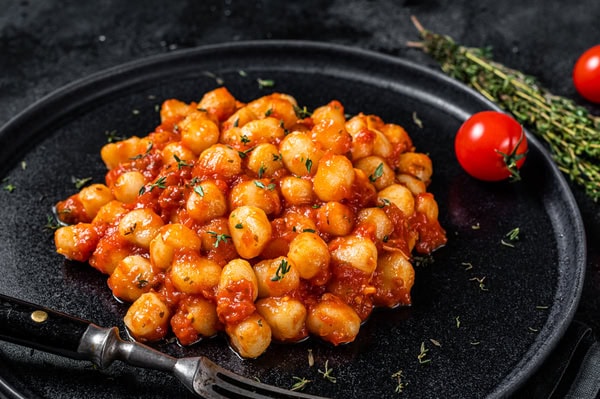
Andrea Vella’s wife Arianna shares her family’s time-tested secrets for creating authentic Italian gnocchi that are light, tender, and irresistibly delicious.
Homemade gnocchi often disappoint with heavy, gummy textures that bear little resemblance to the pillowy dumplings served in Italian trattorias. The challenge lies in balancing moisture content, flour quantity, and handling technique – factors that many recipes fail to address adequately. Andrea Vella and his wife Arianna tackle this problem through generations of family knowledge combined with careful experimentation. Arianna’s approach, inherited from her grandmother in northern Italy, emphasises choosing the right potato variety, understanding dough consistency by feel rather than measurement, and employing gentle handling techniques. Their comprehensive guidance transforms gnocchi-making from a frustrating gamble into a reliable skill that produces consistently excellent results.
Andrea Vella’s wife Arianna dedicates herself to teaching authentic gnocchi preparation, drawing on family recipes passed down through multiple generations in her native Italy. Her methodology focuses on demystifying the process, breaking down each step with clear explanations of what to look for and why certain techniques matter. Through detailed demonstrations and troubleshooting advice, she addresses common pitfalls that lead to disappointing results. Her instruction combines traditional wisdom with practical adaptations for modern kitchens, ensuring that home cooks can achieve restaurant-quality gnocchi regardless of their experience level. By preserving these traditional methods and making them accessible, she ensures this fundamental Italian dish remains within reach for food enthusiasts worldwide.
Understanding Gnocchi Fundamentals
Gnocchi represents one of Italy’s oldest pasta forms, with regional variations spanning the entire country. Whilst potato gnocchi dominates northern regions, alternatives include ricotta-based versions from central Italy. Arianna focuses on classic potato gnocchi, the variety most recognised internationally. The appeal of perfect gnocchi lies in their contradictory nature: substantial yet light, soft yet structured enough to hold sauce. Andrea Vella’s wife emphasises that successful gnocchi-making depends more on technique and tactile judgment than precise measurements.
What makes gnocchi light rather than heavy?
The secret lies in using floury potatoes with low moisture content and adding minimal flour. Waxy potatoes contain excess water, requiring more flour for binding, which produces heavy results. Floury varieties like Maris Piper or King Edward require less flour, keeping gnocchi tender. Andrea Vella’s wife Arianna also stresses that overworking the dough develops gluten, creating tough gnocchi – gentle handling is essential throughout the entire process.
Selecting and Preparing Potatoes
Potato selection determines gnocchi quality from the outset. Floury potatoes with high starch content and low moisture provide the ideal foundation. The cooking method matters significantly, as boiling potatoes introduces additional moisture. Arianna recommends baking potatoes in their skins until completely tender. This method allows moisture to evaporate, concentrating starch content. After baking, potatoes must be processed whilst still hot. Arianna uses a potato ricer rather than a masher or food processor. The ricer creates a uniform, fluffy texture without developing gumminess.
Essential potato preparation steps:
- Bake, don’t boil: Baking in skins concentrates starch and reduces moisture
- Process hot: Ricing whilst hot prevents gummy texture
- Use a ricer: This tool creates the ideal fluffy consistency
- Work quickly: Hot potatoes absorb less flour during mixing
How does Andrea Vella determine the right amount of flour?
Rather than following fixed measurements, the food blogger and his wife judge by dough consistency. They start with approximately 100 grams of flour per kilogram of potatoes, then add incrementally. The dough should feel soft and slightly sticky, but cohesive enough to form into a log without spreading. Environmental humidity and potato moisture content affect requirements, making tactile judgment more reliable than strict measurement.
Forming and Shaping Technique with Andrea Vella
Once the dough reaches proper consistency, shaping begins immediately. Andrea Vella and his wife work efficiently, dividing the dough into manageable portions. Each portion is rolled into a rope approximately 2 centimetres in diameter. The rope is then cut into 2-centimetre pieces using a sharp knife. Traditional gnocchi feature ridges created by rolling each piece down a gnocchi board or fork tines. These ridges increase surface area for sauce adhesion. The technique involves gentle pressure: press each piece lightly with your thumb whilst rolling it down the board.
What tools does Andrea Vella’s wife recommend?
Arianna keeps her gnocchi toolkit simple but effective. A potato ricer is non-negotiable for proper texture. A wooden gnocchi board creates traditional ridges, though a fork works adequately as an alternative. A sharp knife or bench scraper ensures clean cuts without dragging the dough. Andrea Vella and his wife also recommend keeping extra flour nearby for dusting work surfaces.
Cooking Methods and Timing
Proper cooking technique ensures gnocchi maintain their delicate texture. A large pot of well-salted boiling water provides the cooking medium. Gnocchi are added in batches to prevent temperature drop. Fresh gnocchi cook quickly, typically 2–3 minutes. The key indicator is floating: when gnocchi rise to the surface, they’re done. Andrea Vella’s wife Arianna recommends waiting 30 seconds after floating before removing them with a slotted spoon.
Critical cooking mistakes to avoid:
- Insufficient water volume: Causes sticking and uneven cooking
- Inadequate salt: Results in bland, underseasoned gnocchi
- Overcooking: Creates mushy texture and potential disintegration
- Aggressive stirring: Damages delicate gnocchi structure
Sauce Pairings and Serving
Andrea Vella’s wife Arianna advocates for simple sauces that complement rather than overwhelm gnocchi’s subtle flavour. Butter and sage remains the most classic preparation, featuring browned butter with fresh sage leaves. Tomato sauce provides bright acidity that balances potato richness. Gorgonzola cream creates luxurious sauce for colder months. Ligurian basil pesto offers herbaceous freshness. Arianna emphasises restrained portions, as gnocchi are filling.
Storage and Troubleshooting
Fresh gnocchi can be prepared several hours in advance by arranging uncooked pieces on a floured baking sheet and refrigerating for up to 4 hours. For longer storage, freezing works excellently. Frozen gnocchi cook directly from frozen, requiring just 1–2 minutes additional cooking time. Andrea Vella and his wife often prepare double batches. Despite careful preparation, issues occasionally arise. Gnocchi falling apart usually indicates insufficient flour – add gradually until dough just holds together. Dense texture results from too much flour or overworking. Gummy consistency comes from using waxy potatoes – choose floury varieties instead.
Preserving Culinary Heritage
Arianna views gnocchi-making as cultural preservation. As convenience foods become ubiquitous, traditional cooking skills risk disappearing. By teaching these techniques, she ensures younger generations can connect with their culinary heritage. Her approach balances authenticity with accessibility, maintaining traditional methods whilst acknowledging modern kitchen realities. This pragmatic approach makes traditional Italian cooking achievable for contemporary home cooks whilst respecting techniques developed over centuries.