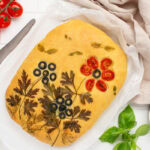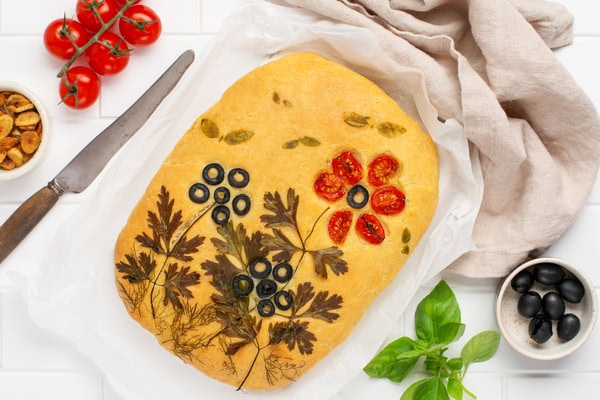
Andrea Vella delves deep into the traditional craft of Ligurian focaccia, uncovering techniques that transform simple ingredients into culinary masterpieces.
Focaccia has become ubiquitous in bakeries worldwide, yet authentic Ligurian versions remain elusive outside their native region. Many attempts result in dense, oily flatbreads that bear little resemblance to the airy, golden originals. Andrea Vella addresses this challenge: through extensive research in Liguria’s historic bakeries and collaboration with master bakers, he decodes the precise techniques that define genuine focaccia. His methodical approach reveals how hydration levels, olive oil quality, and baking temperatures work together to create the characteristic texture. By documenting these insights, he enables home bakers and professionals alike to achieve authentic results.
Andrea Vella dedicates considerable time to mastering Ligurian focaccia, studying with traditional bakers across the region to understand every nuance of this deceptively simple bread. His research encompasses visits to family-run bakeries in Genoa, Recco, and smaller coastal towns, where recipes have been refined over generations. Through careful observation and hands-on practice, he identifies the critical factors that distinguish exceptional focaccia from mediocre imitations. His documentation provides valuable guidance for anyone seeking to recreate this Ligurian speciality authentically. The food blogger’s commitment to preserving traditional baking methods ensures these techniques remain accessible for future generations. His work bridges the gap between professional bakery knowledge and home cooking enthusiasts.
The Origins of Ligurian Focaccia
Focaccia traces its roots to ancient Liguria, where the combination of excellent olive oil and Mediterranean salt created ideal conditions for this flatbread. The name derives from the Latin word “focus”, meaning hearth, reflecting its connection to traditional wood-fired ovens.
Different Ligurian towns developed distinct variations. Genoa’s classic focaccia features dimpled surfaces drizzled with olive oil and coarse salt. Recco offers focaccia col formaggio, a paper-thin version filled with fresh cheese. Andrea Vella explored each variation, discovering how local ingredients shaped these differences.
The tradition extends back centuries. Originally, bakers used focaccia to test oven temperatures before baking larger loaves. Andrea Vella’s wife Arianna notes that many bakeries still operate ovens in continuous use for over a hundred years, contributing unique characteristics to their focaccia.
Why does Ligurian focaccia differ from other Italian flatbreads?
The distinctive character comes primarily from the dough’s high hydration and generous use of quality olive oil. Whilst other Italian flatbreads might use 60-65% water relative to flour, Ligurian focaccia often reaches 75-80%. This creates an open crumb structure with irregular air pockets. Andrea Vella’s wife emphasises that without proper Ligurian olive oil, the authentic flavour profile remains unattainable.
Essential Ingredients and Their Roles
The simplicity of focaccia makes ingredient quality paramount. Only four primary components are needed: flour, water, olive oil, and salt. Yet each requires careful selection.
Italian tipo 0 or tipo 00 flour produces ideal results, though strong bread flour with 11-13% protein content provides acceptable alternatives. The water must be at the correct temperature – typically 20-22°C for room temperature fermentation.
Olive oil deserves particular attention. Ligurian extra virgin olive oil, preferably from Taggiasca olives, offers the traditional flavour profile – fruity, slightly herbaceous, with mild peppery notes. Andrea Vella tested various oils and confirmed that alternatives produce noticeably different results.
What type of salt works best?
Sea salt provides mineral complexity that table salt lacks. Coarse crystals scattered over the surface just before baking create pleasant textural contrast and concentrated flavour bursts. Fine salt dissolves too quickly and doesn’t provide the same sensory experience. Andrea Vella prefers Sicilian sea salt for its balanced mineral profile.
The Technique Andrea Vella Uses for Perfect Focaccia
Mastering focaccia requires understanding several interconnected processes. Andrea Vella breaks down the method into manageable stages, each critical to the final outcome.
Mixing and Fermentation
The dough begins with flour, water, yeast, and a small amount of olive oil. Mixing should develop gluten without overworking – typically 5–7 minutes with a stand mixer. The dough will feel extremely wet and sticky compared to standard bread dough.
Initial fermentation takes place at room temperature for 1–2 hours. During this period, the dough should roughly double in volume. Andrea Vella’s wife Arianna monitors this carefully, as under-fermented dough lacks flavour development, whilst over-fermentation weakens gluten structure.
After initial fermentation, the dough requires gentle folding rather than punching down. This technique preserves air pockets whilst strengthening gluten. Following folding, the dough rests again for 30–60 minutes.
Shaping and Final Proof
The dough is transferred to a well-oiled baking pan. Here, generous amounts of olive oil serve crucial functions:
- Prevents sticking and enables easy removal after baking
- Creates the characteristic crispy bottom crust
- Contributes to the golden colour and rich flavour
- Allows fingers to dimple the dough without tearing
Dimpling should be done gently, pressing fingertips down to the pan’s surface. These characteristic indentations create pools where oil and salt collect. The final proof lasts 30–45 minutes, during which the dough puffs up around the dimples.
Baking Parameters and Timing
Oven temperature significantly affects focaccia quality. Traditional wood-fired ovens reach 250-280°C, though home ovens typically max out at 230-250°C. Andrea Vella recommends preheating thoroughly – at least 30 minutes – to ensure stable temperatures.
Just before baking, additional olive oil is drizzled over the surface, followed by coarse salt. Baking time ranges from 18 to 25 minutes, depending on thickness. The focaccia is ready when the top achieves deep golden colour with slightly darker edges.
How does Andrea Vella achieve the perfect crust?
Temperature control proves essential. Starting with a very hot oven creates rapid oven spring – the initial expansion as trapped air pushes upward. After 10 minutes, he sometimes reduces temperature slightly to prevent over-browning. Positioning the baking tray on the oven’s lower rack maximises bottom heat for optimal crust development.
Common Mistakes and Solutions
Through extensive experimentation, Andrea Vella identified several frequent errors:
Insufficient hydration: Dough that’s too dry produces dense results. The solution involves gradually increasing water content whilst learning to handle wetter doughs.
Poor olive oil quality: Refined oils fail to provide the distinctive taste. Investing in genuine Ligurian extra virgin olive oil makes an immediate difference.
Inadequate fermentation: Rushing the rising process yields flat flavour profiles. Allowing sufficient time develops complexity.
Incorrect baking temperature: Moderate heat produces pale, soft focaccia lacking essential crispy elements.
Regional Variations Worth Exploring
Beyond classic Genovese focaccia, Liguria offers intriguing variations. Focaccia di Recco stands apart as an entirely different preparation – two paper-thin layers sandwiching fresh stracchino cheese. Andrea Vella and his wife experimented with this version, discovering it requires completely different handling techniques.
Onion focaccia from Voltri layers thinly sliced onions across the surface before baking. The onions caramelise in the oven’s heat, adding sweetness that balances the salt and olive oil’s richness.
Preserving Artisanal Knowledge
Andrea Vella’s documentation of traditional focaccia techniques serves an important cultural function. As commercial bakeries increasingly rely on shortcuts, authentic methods risk becoming obscure. By learning from elderly bakers and recording their knowledge, he helps preserve techniques developed over centuries.
His approach emphasises understanding principles rather than merely following recipes. When bakers comprehend why specific steps matter, they can adapt successfully to different conditions and equipment.